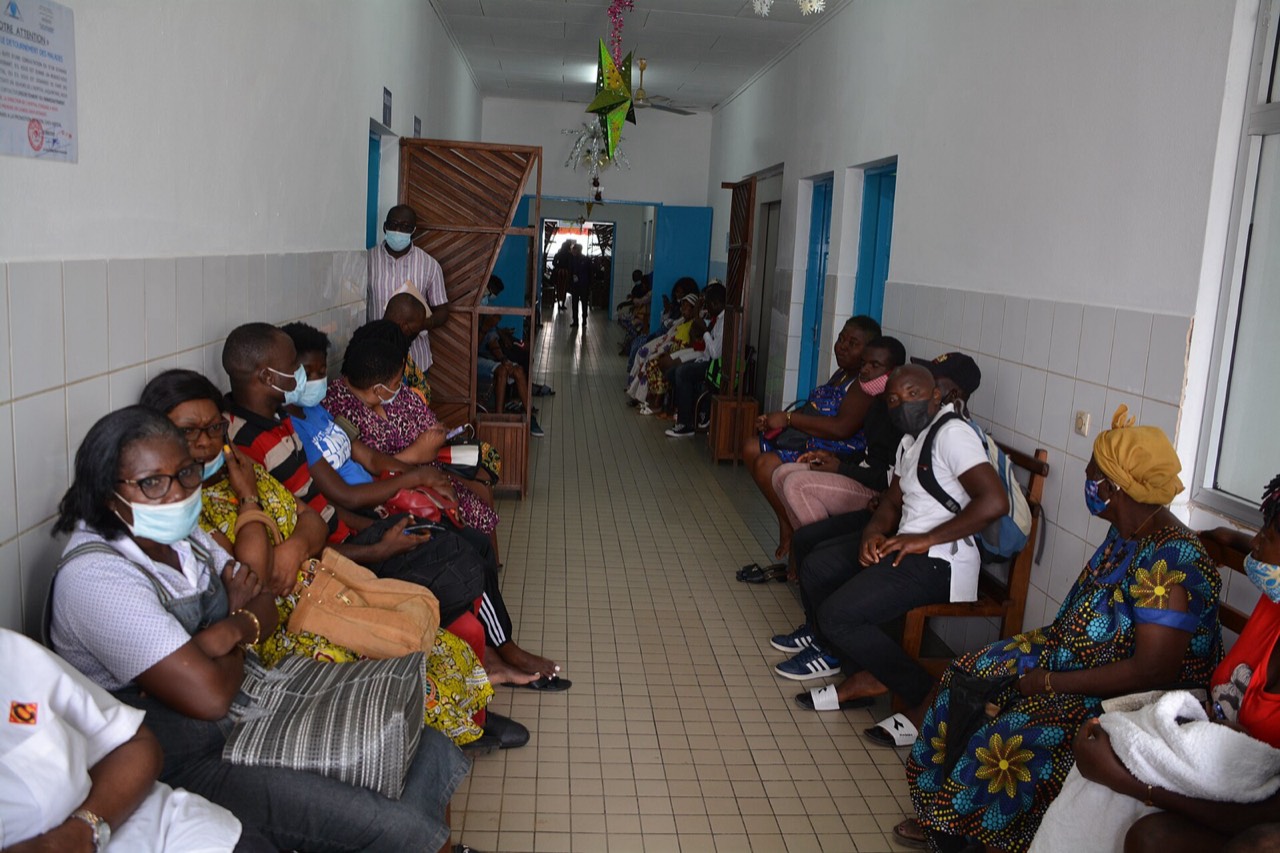
The short answer: Clinic waits are long because too many patients arrive at once for too few staff, and much of the visit is spent on admin: finding folders, re-taking histories and moving between queues. A study of South African primary health care clinics found a median visit of 2 hours 36 minutes, against a national standard of two hours of waiting.
The queue starts before sunrise. People arrive at 4 or 5am hoping to be near the front, bring a flask and something to sit on, and wait for the gate to open. Then they wait for their folder, wait for their vitals, wait for the nurse, and wait for the pharmacy.
How long is the wait?
A study of primary health care clinics, published in PLOS Global Public Health in 2022, found a median visit of 2 hours 36 minutes, and a quarter of visits took more than 3 hours 43 minutes. The Department of Health's own standard is two hours of waiting, or three hours including the time being seen.
At a large community health centre in Cape Town, median waits were measured at 3 hours 35 minutes before an appointment system was introduced, and 3 hours 55 minutes after it. A system on paper did not fix the wait.
Our calculation
Someone who collects chronic medicine every month can lose about eight working days a year to the clinic.
A typical visit in the study took 2 hours 36 minutes, and in rural KwaZulu-Natal it takes a median 81 minutes each way to get there. That is about five hours for each visit, or 64 hours over a year of monthly visits.
Why the queues are so long
- Everyone arrives at once. Early arrival was linked to longer waits in the study, because the whole day's patients start together.
- Batching. Folders, vitals and consultations are often done in batches, so each patient waits for the whole group.
- Finding the folder. If the record cannot be found, a new one is opened and the history is taken again.
- Too few staff. With fewer than one doctor for every 1,000 people, every absence lengthens the line.
The cost falls hardest on people who can least afford it. In rural KwaZulu-Natal, patients on HIV treatment spent about five hours a month on clinic visits and travel.
What shortens the wait
- Appointments that are kept. Spreading arrivals across the day, with the folder ready before the patient arrives.
- Records that are already there. No searching, no re-taking the whole history.
- Collecting medicine closer to home. Stable patients can often collect chronic medicine at external pick-up points.
How Kindredd helps
With the free Kindredd Patient app, your history, results and medicines are on your phone. When you share your record with a QR code, the nurse starts with what they need instead of hunting for a folder or taking your history from the beginning.
Kindredd cannot open more clinics. It can take some of the waiting out of each visit.
Questions people ask
How long is the waiting time at public clinics in South Africa?
A study of primary health care clinics found a median visit of 2 hours 36 minutes. The Department of Health standard is two hours of waiting.
Why do people queue so early at clinics?
Because many clinics see patients in arrival order, so arriving early feels like the only way to be seen the same day.
Can I collect my chronic medication without waiting at the clinic?
Many stable patients can collect chronic medicine from an external pick-up point. Ask your clinic whether you qualify.
Know someone who spends their mornings in a clinic queue? Send them this.
Was this article helpful?
Has this happened to you or your family? Tell us your story. We read every one, and with your permission it may help shape what we build next.
More from the blog

Why do I have to repeat my medical history at every doctor in South Africa?
"Start from the beginning again": what lost records cost patients.

What should paramedics know about me in an emergency? Why your allergies and medicines matter
When minutes matter.
Why do I have to redo blood tests and scans? The cost of repeated medical tests in South Africa
Paying twice: what it costs families and medical schemes.
Sources
- Clinic visit duration and associated factors in primary health care clinics. PLOS Global Public Health, January 2022. doaj.org
- National Department of Health, Patient Waiting Time Policy (2016). knowledgehub.health.gov.za
- Waiting times before and after an appointment system at a Cape Town community health centre. University of Cape Town. open.uct.ac.za
- Time and money: the true costs of health care utilization for patients receiving free HIV and TB care in rural KwaZulu-Natal. JAIDS, 2015. pure.eur.nl
Photo: Happi Raphael, Wikimedia Commons, licensed CC BY-SA 4.0.