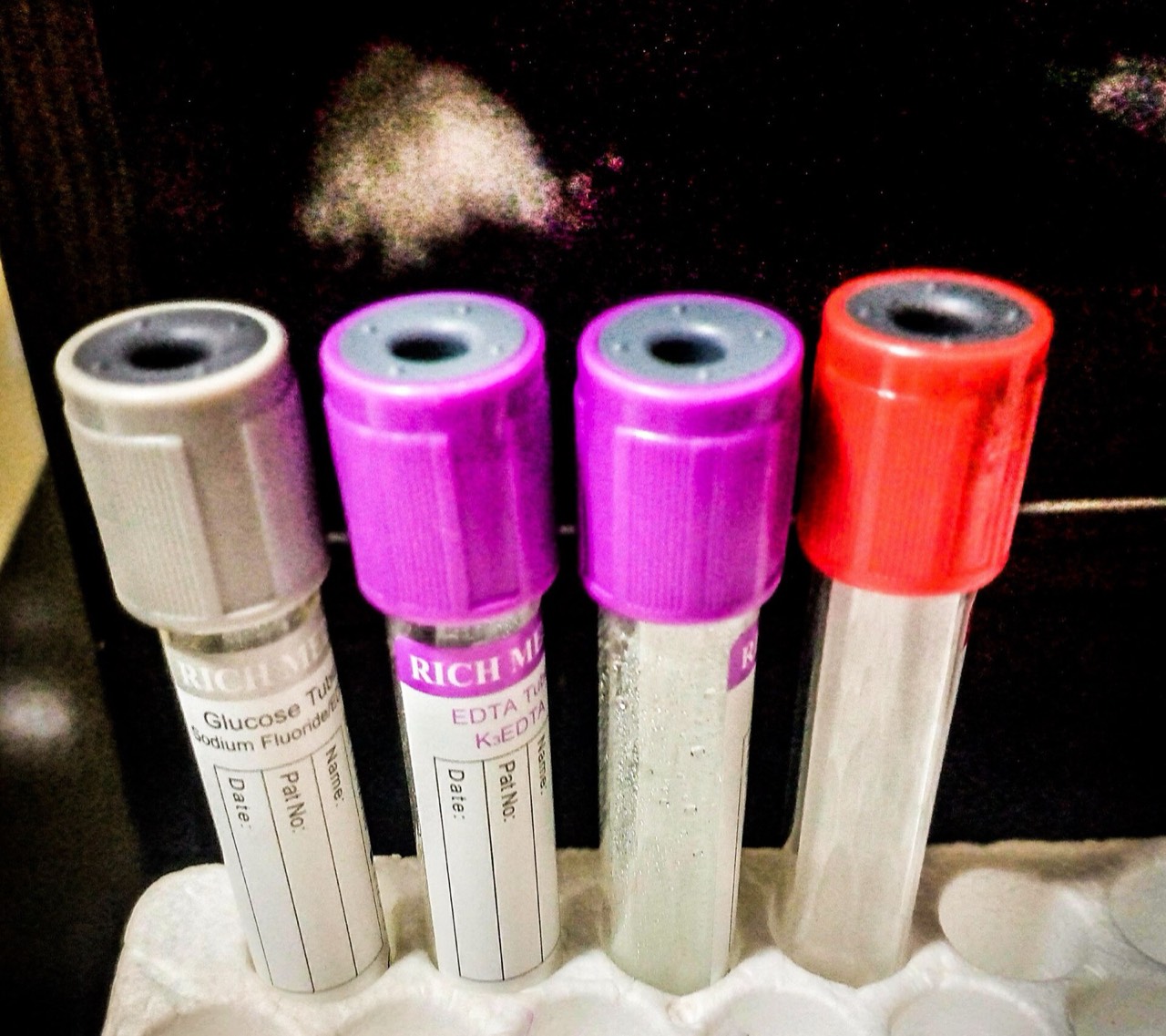
The short answer: Tests are often repeated because the earlier result cannot be found in time, not because it was wrong. When a doctor cannot see last month's blood test or X-ray, repeating it is the safe choice. You pay with your time, your arm and sometimes your money, and the health system pays again.
You had the blood taken three weeks ago. The results came back fine. Now you are at a different hospital, and the nurse is tying the tourniquet again.
You ask whether they can just look up the old result. They can't. It is on another system, in another building, or on a printout you left at home.
How often it happens
At Tygerberg Hospital, a study of 501 patients before surgery, published in the South African Medical Journal in 2025, found full blood counts and chest X-rays done unnecessarily in about a third of patients, and 177 redundant duplicate tests.
Our calculation
About one unnecessary duplicate test for every three patients.
The Tygerberg study counted 177 duplicate tests across 501 patients. On a surgical list of 30 patients, that is around 10 tests that tell the team nothing new.
The fix works when the earlier result is visible. At Groote Schuur Hospital, a programme that checked requests before they went to the laboratory cut tests and costs by 24% per inpatient day. In Rochester, New York, doctors who could look up a patient's earlier records were 25% less likely to repeat the same scan within 90 days.
Who pays
- You. Another needle, another wait, and for many people another co-payment or a day's wages lost.
- Your medical scheme. Every duplicate test is paid from the same pool as your cover, which feeds next year's contribution increase.
- Public hospitals. Laboratory money spent twice is money not spent on staff, medicines or beds.
How to avoid a repeat test
- Ask for every result. A copy or a photo of each report, with the date.
- Keep them together. One place, in date order, that you can show a doctor in seconds.
- Say when you had it done. "I had a full blood count on the 3rd at the clinic" can save a needle.
How Kindredd helps
In the free Kindredd Patient app, you can add every result to your health timeline: photos of reports, PDFs and letters. When you see a doctor, you can share your record with a QR code, so last month's blood test is on their screen before the tourniquet comes out.
Questions people ask
Why do hospitals repeat blood tests?
Usually because the earlier result cannot be seen in time, or because it is too old to rely on for a decision. Showing a recent dated result can sometimes avoid a repeat.
Can I use blood test results from another lab?
Often yes, if the result is recent and clearly dated and the doctor is happy that it answers their question. Ask before the test is taken.
Do medical schemes pay for repeated tests?
Schemes usually pay, within your benefits, but every duplicate test is paid from members' contributions and can count against your annual limits.
Paid for the same test twice? Send this to someone it might help.
Was this article helpful?
Has this happened to you or your family? Tell us your story. We read every one, and with your permission it may help shape what we build next.
More from the blog

Why do I have to repeat my medical history at every doctor in South Africa?
"Start from the beginning again": what lost records cost patients.

What should paramedics know about me in an emergency? Why your allergies and medicines matter
When minutes matter.

What happens to my referral letter? Why hospital referrals get lost in South Africa
Referred, then lost.
Sources
- Preoperative investigations at Tygerberg Hospital: overtesting and duplicate testing in 501 patients. South African Medical Journal, 2025. scielo.org.za
- Laboratory test gatekeeping on medical wards at Groote Schuur Hospital: 24% fewer tests and lower costs per inpatient day. open.uct.ac.za
- Vest JR, Kaushal R and colleagues, health information exchange and repeat imaging, Rochester, New York. Weill Cornell Medicine. news.weill.cornell.edu
Photo: Frankincense Diala, Wikimedia Commons, licensed CC0.