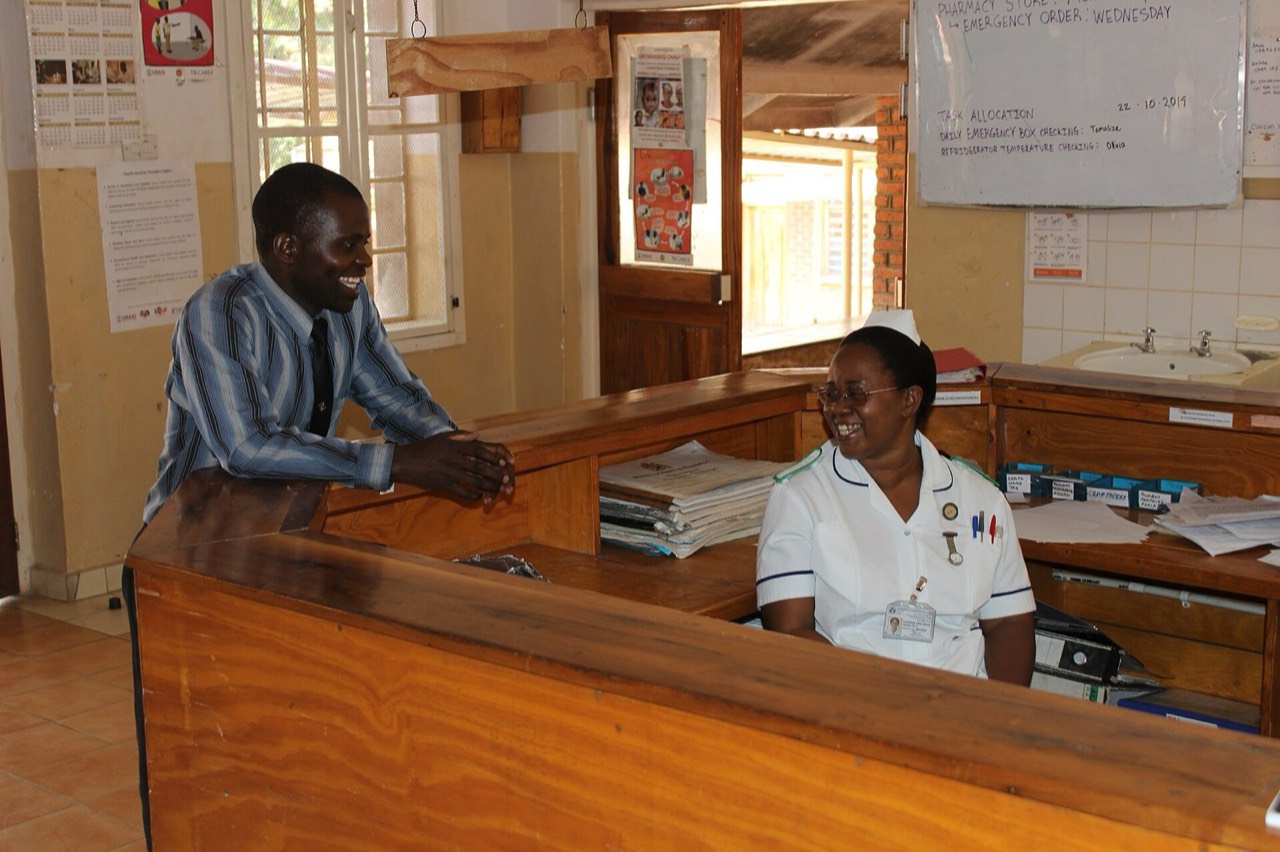
The short answer: A handover is when one team passes its patients to the next, at every shift change and every transfer. It is one of the riskiest moments in a hospital, because what the outgoing team knows has to be squeezed into a few minutes. Structured handovers have been shown to cut preventable harm to patients by 30%.
Seven in the morning. The night team is tired, the day team is arriving, and forty patients have to be handed over before the ward round. Bed 12 had a fever at 3am. Bed 7's potassium is due to be rechecked. The family in bed 21 wants to talk to someone about going home.
Some of it is said. Some of it is written on the back of a list. Some of it walks out of the door with the night team.
Why handovers fail
- Time. Many patients, a few minutes, and everyone is exhausted.
- No structure. Each person hands over in their own way, so important things depend on memory.
- Paper that does not travel. A list in someone's pocket cannot be read by the next team or checked later.
- Interruptions. Phones, emergencies and new admissions in the middle of it all.
Breakdowns in communication are named again and again by The Joint Commission, which reviews serious patient safety events in the United States, as a leading cause of the most serious events it reviews.
What a good handover changes
In a study across nine hospitals published in the New England Journal of Medicine in 2014, teams adopted a structured handover called I-PASS. Medical errors fell by 23%, and preventable adverse events, meaning patients actually harmed by errors, fell by 30%, from 4.7 to 3.3 per 100 admissions.
Our calculation
On one busy ward, that could mean about 22 fewer patients harmed every year.
Take a ward that admits about 30 patients a week, around 1,560 a year. The study saw harm fall from 4.7 to 3.3 events for every 100 admissions. On that one ward, that is about 22 fewer people hurt in a year.
What makes a handover safer
- Same order, every patient. How ill they are, a one-line summary, what to do, what might happen, and a check that it was understood.
- Written and spoken. Say it, and leave it somewhere the next team can read it again.
- A quiet place and a set time. Protect the minutes the handover needs.
How Kindredd helps
Kindredd team plans include automated handover in the Care app, so the next shift starts from the same written picture instead of a scrap of paper.
Teams also share one roster, so everyone can see who is on and who to call.
Questions people ask
What is a patient handover?
The moment one health worker or team passes responsibility for a patient to another, for example at a shift change or when a patient moves ward.
What is the I-PASS handover method?
A structured handover that covers Illness severity, Patient summary, Action list, Situation awareness and Synthesis by the receiver. In a 2014 study it cut preventable harm by 30%.
Why is handover a patient safety risk?
Because important information has to be passed on quickly, often by tired staff, and anything missed may not be noticed until something goes wrong.
Running handovers off a scrap of paper? Send this to your team.
Was this article helpful?
Has this happened to you or your family? Tell us your story. We read every one, and with your permission it may help shape what we build next.
More from the blog
How many doctors does South Africa have per person? The doctor shortage in Africa explained
One continent, too few doctors.

Is it legal for doctors to share patient information on WhatsApp? POPIA and patient privacy explained
The WhatsApp ward.

Health worker burnout on the African continent: why are doctors and nurses overworked, and what can fix it?
The doctor who never goes home: Naz's story from Nigeria.
Sources
- Starmer AJ and colleagues. Changes in medical errors after implementation of a handoff program. New England Journal of Medicine, 2014. Summary by Boston Children's Hospital. answers.childrenshospital.org
- Intermountain Healthcare: multicenter patient safety study reduces medical error injuries by 30% (error rates per 100 admissions). intermountainhealthcare.org
- The Joint Commission, sentinel event data (2023): communication failures among the leading causes of reported sentinel events. jointcommission.org
Photo: Hodge120, Wikimedia Commons, licensed CC BY-SA 4.0.